
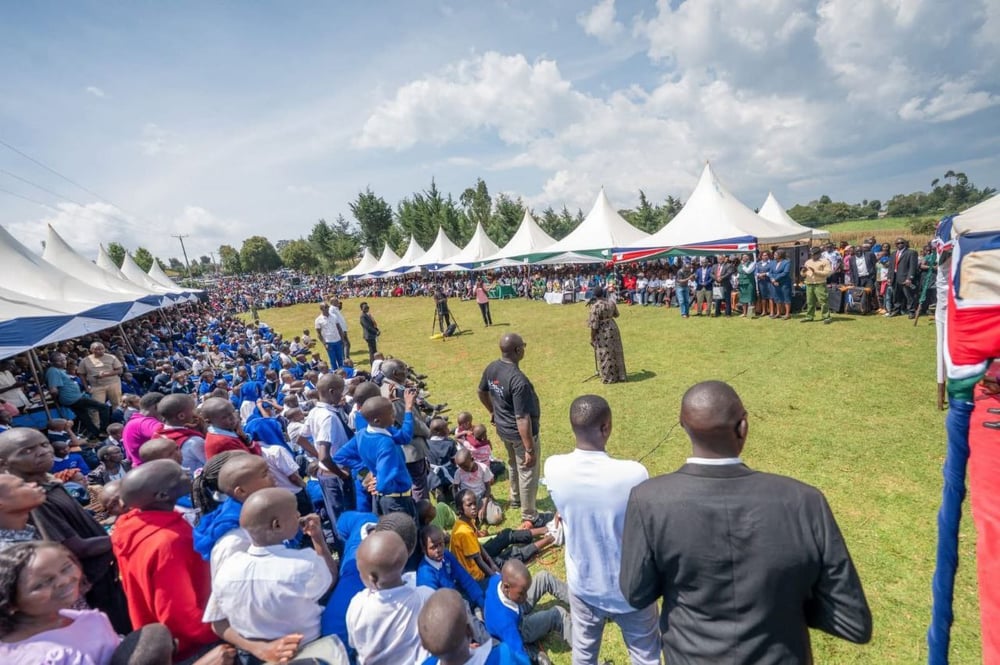
Busia School Workshops - May 2025
Objectives
The May Busia workshops were designed as a follow-up to earlier open lessons in the county. Path to Russia returned to schools where curiosity about Russian language and culture was already strong, while also visiting new partners to understand the daily barriers affecting learning, attendance, and student confidence.
The programme combined cultural exchange with a practical needs assessment. Each visit asked the same question: what can be done now, with partners, to help students stay in school and learn in safer, better-equipped spaces?
What Happened
On 15 and 16 May 2025, the team visited four schools across Busia. At Bishop Hannington Khuduru Primary School, pupils joined an interactive session on Russian culture and asked questions about life, language, and education beyond Kenya. The school also received footballs and a printer to support examinations and daily learning.
The team then returned to St. Peter's Busibi Girls Secondary School, where the second session gave students another opportunity to explore Russian culture while teachers shared how the previous workshop had improved student motivation. Practical support followed: equipment for home-science lessons, including a sewing machine, mixers, baking tins, a whisk, volleyballs, and footballs.
At St. Bridget's Namuduru Girls Secondary School and St. Michael's Buduma Girls Secondary School, the sessions opened conversations about low morale, dropout risk, and the need for stronger academic support. Students were introduced to Russian history and culture, while teachers and school leaders described urgent gaps in libraries, internet access, science laboratories, computer rooms, dormitories, power backup, and menstrual-health support.
Key Moments
The most important moments were not only in the lessons. They came during the conversations after the sessions, when school leaders connected cultural curiosity with concrete development priorities.
At Khuduru, pupils still learn in a church building because of inadequate classrooms. The school has no borehole, no reliable drinking-water source, no library, and no computer room. At Busibi, girls face dropout pressure linked to poverty and early pregnancy, but the school also has clear plans for mentorship, library expansion, and practical-skills equipment. At Namuduru and Buduma, the same pattern appeared: students are eager, but the schools need stronger infrastructure, modern learning tools, and support systems that protect girls.
Why It Mattered
The second Busia round showed how repeat visits build trust. The first workshops opened the door; the May visits made the partnership more specific. Instead of treating cultural exchange as a one-day activity, the programme turned it into a pathway for mentorship, learning resources, sports equipment, ICT access, and girls' retention.
The visit also drew media attention from Mulembe FM, Pure FM, Nyota TV, and other local outlets, helping school needs reach a wider public. For Path to Russia, Busia became a model of practical cultural diplomacy: listen first, teach with warmth, return with support, and keep building with the schools that are ready to grow.